
Around 80 minutes into Academy Award winner Chloé Zhao’s “Hamnet,” an adaptation of Maggie O’Farrell’s novel, May (Emily Watson) delivers the harrowing line, “What is given may be taken away, at any time.” This sentiment grasps its talons into Zhao’s emotionally rich and devastating feature, following Agnes (Jessie Buckley), the wife of William Shakespeare (Paul Mescal), their relationship and heavy losses, culminating in the premiere of the Bard’s signature play, ‘Hamlet’.
From the opening scene, the movie transports its audience to the 17th century. We observe the lush and deeply layered soundscape of the forest (birds, the wind swaying, and the trees). Here, we meet Agnes, the “child of the forest”, ostracized by the people around her, lying in the wilderness. Soon after, we meet William Shakespeare, shrouded in darkness.
From the start, Zhao sharply contrasts these two characters, scaffolding the drama to enhance its emotional impact. The film relies on Agnes’ character and the believability of her relationship with Shakespeare, and luckily, Jessie Buckley obliged this massive commitment with a wounding performance.
For years, Jessie Buckley has been giving stellar performances within independent cinema, from “I’m Thinking of Ending Things,” “Men,” “Women Talking,” and her Oscar-nominated performance in “The Lost Daughter.” With “Hamnet,” Buckley interjects an innocence in her character without deviating from the ugliness of the traumatic events before and during the film.
“Hamnet” also boasts a strong supporting cast. Emily Watson as Shakespeare’s mother, Mary, is a standout. Towards the start of the movie, she’s cold, allowing Shakespeare’s father to deliver harsh judgments towards Shakespeare’s life choices. Despite this, she comes to her own, showing that Watson can craft a somewhat neglectful character and change her into a supportive character.
Paul Mescal delivers a solid performance, too, adding a sense of charm to Shakespeare that makes their relationship feel more impactful, especially when he describes the story of Orpheus and Eurydice to Agnes early in the film. One of the most impactful performances is the young Jacobi Jupe as ‘Hamnet’, delivering a devastated, innocent, and sentimental performance that lingers throughout the rest of the film.
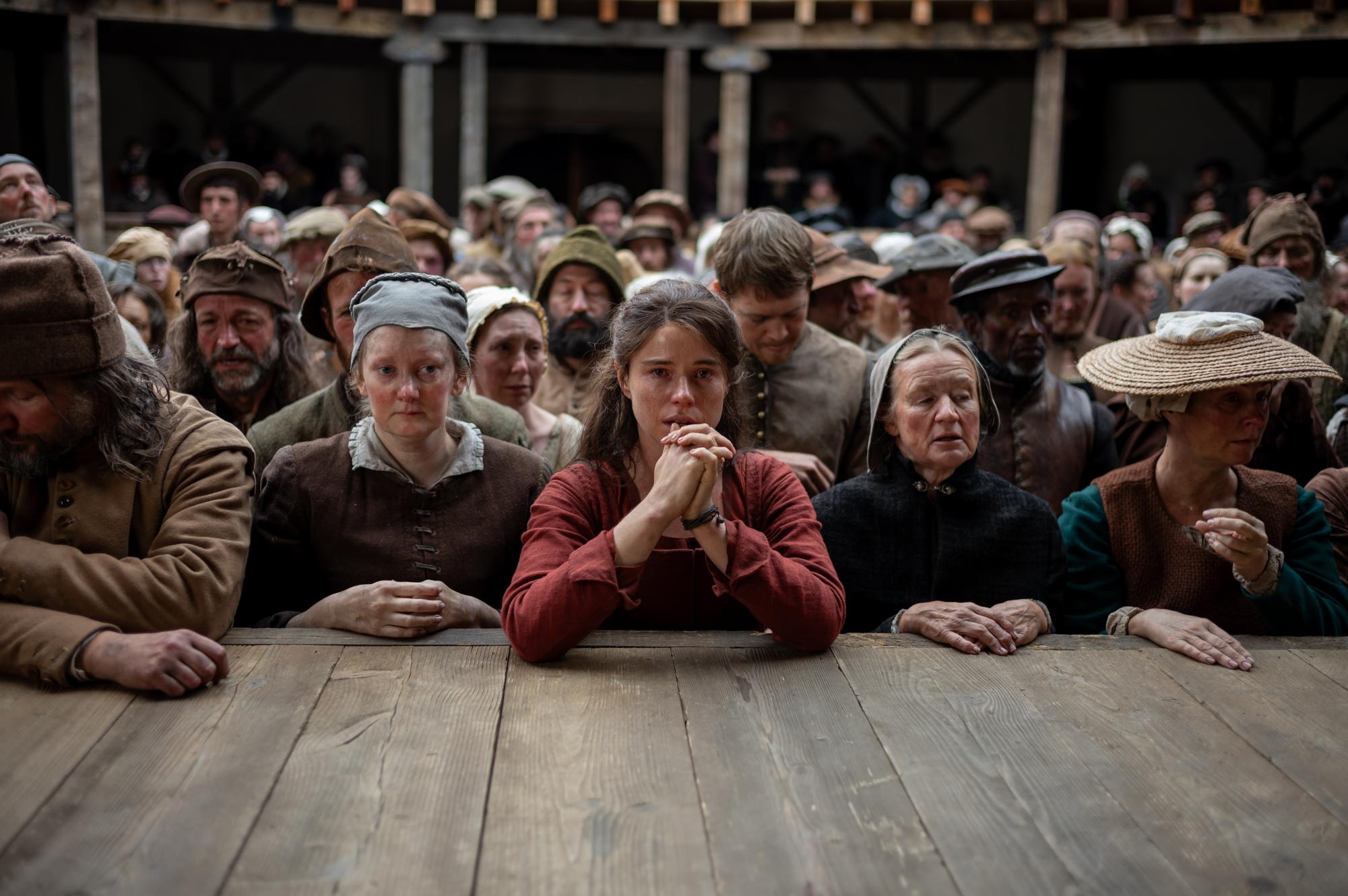
The movie’s slower pace could turn off some audience members, but this allows us to sink deeper into this highly detailed world. The costumes, while simple, are effective in demonstrating these characters, particularly Agnes’ red dress, juxtaposing Agnes’ free-spirited nature with the grayness of the people around her. The sets are also quite appealing, feeling lived in while carrying the darkness that overshadows the movie as it progresses.
Zhao’s direction is noteworthy here, choosing to film the scenes featuring the actors delivering gut-wrenching performances within medium shots, avoiding any sense of “in-your-face” exploitation. Zhao treats them on her level, often utilizing the “show, don’t tell” rule to guide us through this year-long story.
This idea reflects the notion that this isn’t just about Shakespeare; in fact, Mescal is absent for extended periods of time, but we see a glimpse at a person hardly ever considered. There are so many layers to every major artwork, and sometimes we never know who influenced it, how they influenced it, or what the work reflects. This movie displays the troubles that inspire art.
“Hamnet” is an emotionally devastating, well-crafted, and exceptionally acted exploration piece that may be slow, but it builds to a satisfying climax that may bring some audience members to tears.
“Hamnet” is currently available to rent on streaming platforms such as Prime Video or YouTube.