
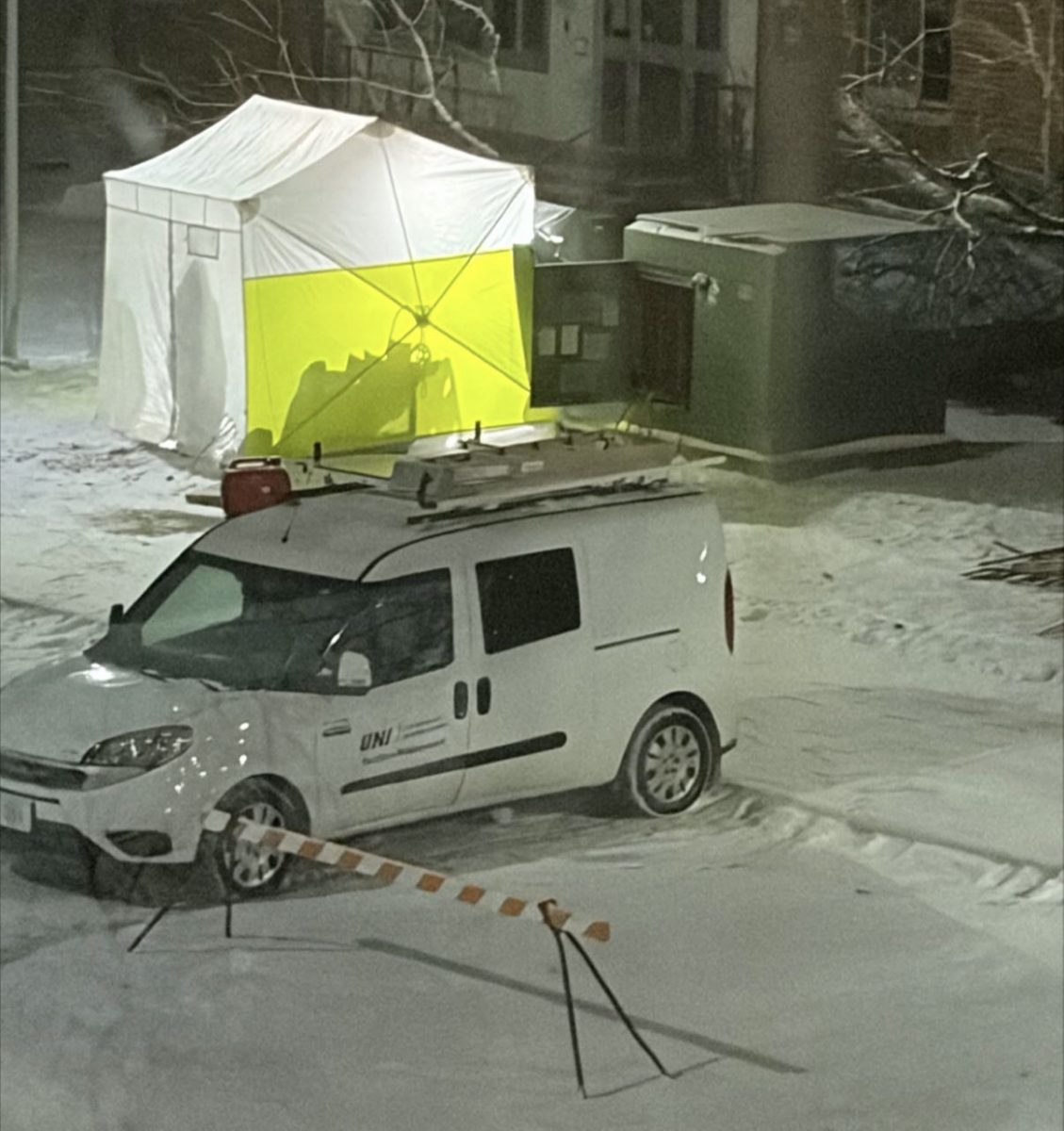
The first day of the spring semester at the University of Northern Iowa was disrupted on Jan. 20 when a power outage affected several campus buildings shortly after noon, including Facilities Management, Panther Village, Shull, Hagemann, Rider, Noehren, Redeker, Gallagher Bluedorn Performing Arts Center, Biology Research Complex, Applied Engineering Building, Center for Energy Envirtonmental Education and Busiines and Community Services. The outage also left Shull Hall residents without electricity until the following morning.
The outage began around 1 p.m. as students returned to campus and settled into the new semester. While power was restored to most affected buildings that afternoon, Shull Hall experienced prolonged outages due to a transformer failure, according to UNI Housing and Dining.
Students living in Shull were without official communication for several hours. At approximately 4 p.m., Housing and Dining sent an email explaining the cause of the outage and estimating power restoration around 11 p.m. that evening. The message also stated that temporary housing would be provided if electricity was not restored.
“I really didn’t think it would last as long as it did,” said sophomore Jason Stivers, a Shull resident. “I was really worried about the fresh fruit that I had literally just bought, and was hoping that it would return soon.”
Electricians quickly arrived on the scene to determine the issue.
“Our electricians go through a process to determine the cause of the outage and slowly energize feeders and building transformers until they find the issue,” said John Streicher.
As the evening progressed, a follow-up email sent around 6 p.m. informed residents that power was not expected to return that night. Housing and Dining then offered temporary relocation options in other on-campus residence halls, including both shared rooms and single apartments. Students were also encouraged earlier in the afternoon to use the Redeker Center as a temporary space while waiting for updates.
Stivers chose to relocate for the night and was placed in a single suite in Lawther Hall.
“I got quite lucky,” he said. “The night went well. However, I do know that a lot of people got a worse draw than me, getting stuck with roommates. Of course, the circumstances were tough, and I think that UNI did the best job they could.”
Despite having a warm place to stay overnight, students faced additional inconveniences. Many lost refrigerated food items, and the relocation process required students to move belongings across campus in frigid temperatures.
“I did lose everything in my fridge, including fruit and yogurt,” Stivers said. “I also had to move a lot of things across campus in the cold, which wasn’t super avoidable given the circumstances.”
Power was restored to Shull Hall the following morning. Housing and Dining later issued a $25 U-Bill credit to affected residents as compensation for the disruption.
While Stivers said he appreciated the relocation process, he expressed frustration with the delayed communication and compensation.
“The university didn’t send any email out until three hours into the outage,” he said. “It felt as if the university didn’t know what to do or say. I would have really liked a quicker response.”
He added that the U-Bill credit did not adequately address food losses.
“In the future, if they gave dining dollars to replace food lost, that would be a lot better,” Stivers said.
Looking ahead, Stivers said clearer and quicker communication would improve the university’s response if a similar situation occurs again, though he acknowledged that the housing staff worked efficiently once relocation began.
“The room relocation process was really seamless and ensured that I had a warm place to spend the night,” he said.


